
ADIS Course 2026: Eligibility, Fees, Career & Scope

What is ADIS (Advanced Diploma in Industrial Safety) ?
ADIS stands for Advanced Diploma in Industrial Safety. It is a specialised programme focused on industrial workplace safety, hazard identification, accident prevention, risk management, and emergency preparedness. The course is designed to help learners understand safety practices relevant to industrial and high-risk work environments. Depending on the institution, the curriculum may cover occupational health, fire safety, industrial hazards, construction safety, safety legislation, environmental management, and emergency response. ADIS can be considered by students and professionals looking to develop a career in industrial safety. Before admission, candidates should verify the institution, course structure, eligibility, duration, and applicable recognition.
Career Opportunities After ADIS: Roles, Responsibilities & Growth :
An Advanced Diploma in Industrial Safety (ADIS) can help learners develop knowledge of workplace safety, industrial hazards, risk assessment, emergency procedures, and safety management practices. After completing the course, candidates may explore safety-related roles across industries such as construction, manufacturing, infrastructure, oil and gas, ADIS Course 2026
CareerVidya: ADIS Course Learning & Admission Support :
CareerVidya can help students and working professionals understand ADIS course options and make informed decisions about their education pathway. Students can receive guidance on eligibility, course structure, admission requirements, institution selection, fees, and available learning formats. Since industrial safety courses can differ in curriculum, duration, practical exposure, and admission criteria, comparing the available options is important before enrolment. CareerVidya's counselling support can help learners understand these differences based on their academic background, work experience, career interests, and future goals. Students can also seek assistance with the admission process and documentation requirements where applicable.
ADIS Course Eligibility: Who Can Apply?
ADIS eligibility requirements can vary depending on the institution and programme. Candidates should check the latest admission guidelines before applying because educational qualifications, work experience, and other requirements may differ. Some programmes may be designed for candidates with technical, engineering, science, or relevant industrial backgrounds, while specific institutions may have different criteria.
Common factors to check include:
- Minimum educational qualification
- Relevant technical or academic background
- Required percentage or marks
- Work experience, if applicable
- Age or other institution-specific requirements
- Required documents and certificates
Candidates should confirm the exact eligibility criteria directly with the institution before submitting an application.
ADIS Course Fees in India: What Students Should Know
ADIS course fees in India can vary significantly depending on the institution, course duration, learning format, curriculum, practical training, and other academic facilities. Students should compare the complete cost instead of looking only at the advertised tuition fee. Additional charges may include registration, examination, study materials, certification, or practical training fees, depending on the institution. Some institutes may also provide instalment or payment options.
Before admission, students should check:
- Total programme fee
- Registration and examination charges
- Practical training costs
- Study material charges
- Payment or EMI options
- Refund and cancellation policies
Always confirm the latest fee structure with the institution before enrolment.
Why Industrial Safety Professionals Are Important in Modern Industries?
Industrial safety professionals play an important role in helping organisations identify workplace hazards and implement appropriate safety practices. Manufacturing plants, construction sites, chemical facilities, power projects, warehouses, and other industrial environments can involve machinery, electrical systems, chemicals, heights, heavy equipment, and other workplace risks. Safety professionals may be responsible for monitoring safety procedures, conducting inspections, supporting risk assessments, organising safety training, and assisting with emergency preparedness. Their responsibilities can vary according to the industry and job position. With increasing attention to workplace safety and compliance, trained professionals can contribute to safer working environments and more systematic safety management.
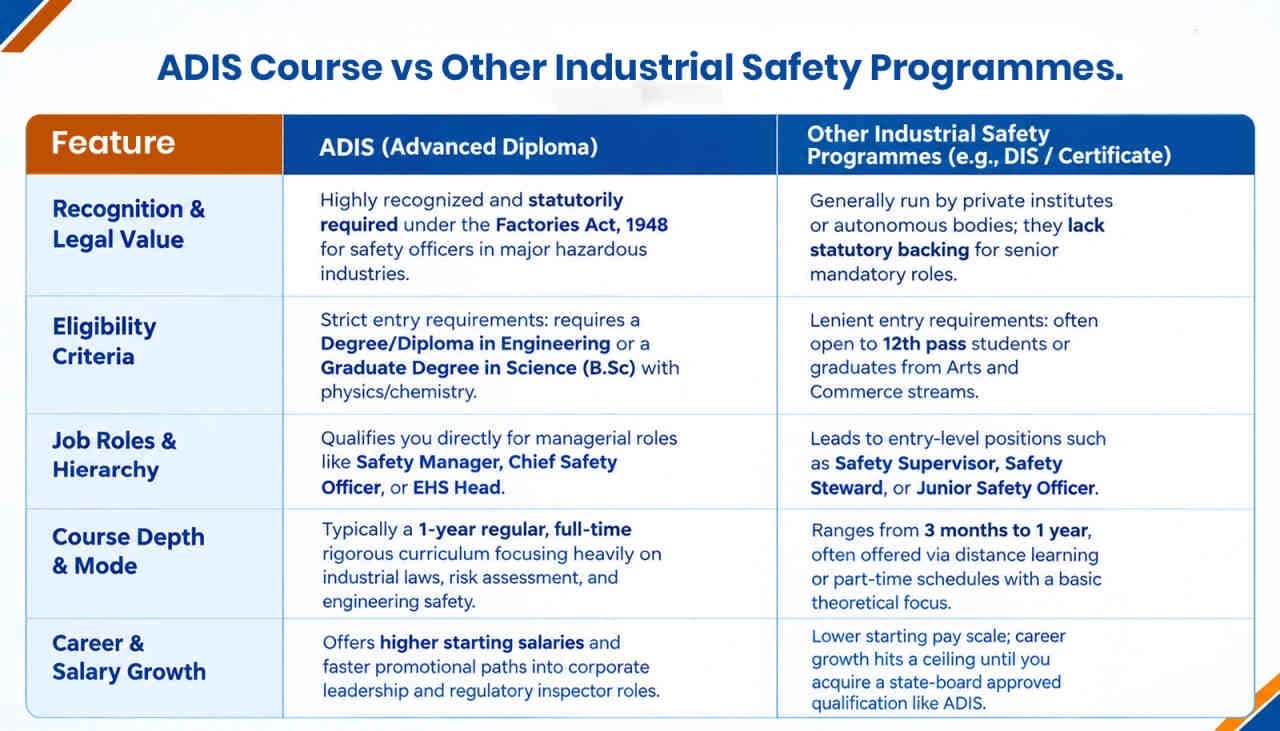
ADIS is one of several educational pathways available to individuals interested in industrial and occupational safety. Other options may include diplomas, certificates, specialised fire and safety courses, occupational health programmes, or degree-level qualifications. The appropriate choice depends on a learner's existing qualification, experience, career objective, preferred industry, and the role they want to pursue. A candidate seeking foundational safety knowledge may consider a shorter certification, while another learner may prefer a more comprehensive diploma-level programme. Before choosing, compare the curriculum, duration, practical exposure, eligibility, institution, certification, and career relevance rather than selecting a course based only on its title.
How to Choose the Right ADIS Course or Colleges?
Selecting an ADIS programme requires careful comparison of the institution and course structure. Students should review the curriculum to understand whether it covers areas relevant to their intended industry. Practical training and industry exposure can also be important for developing an understanding of real workplace safety situations. The institution's academic credentials, learning format, faculty support, examination process, and student services should also be considered. Candidates should verify the exact recognition or certification status applicable to the programme before admission. ADIS Course Eligibility
Important factors to compare include:
- Eligibility and admission requirements
- Course duration and learning format
- Curriculum and safety subjects
- Practical training
- Institution's credentials
- Total course fees
- Examination and certification details
- Career or placement support, if offered

ADIS can be relevant for learners who want to develop knowledge and skills related to industrial workplace safety. The programme may provide exposure to areas such as hazard identification, risk assessment, emergency management, occupational safety, fire safety, and industrial safety procedures. However, career opportunities after the course can depend on the candidate's educational background, practical experience, additional certifications, and employer-specific requirements. Students should therefore consider ADIS as part of a broader career pathway rather than relying on the qualification alone. Gaining practical exposure, understanding industry requirements, and continuously developing safety-related skills can further support long-term professional growth.
FREQUENTLY ASKED QUESTIONS..
Common Questions
Q.1. What is an ADIS course?
ADIS stands for Advanced Diploma in Industrial Safety and focuses on workplace safety, industrial hazards, risk management, and accident prevention.
Q.2. Who can apply for ADIS?
Eligibility varies by institution and may depend on educational qualifications, technical background, and work experience.
Q.3. What subjects are covered in ADIS?
Subjects may include industrial safety, fire safety, occupational health, hazard management, emergency response, and safety regulations.
Q.4. How much does an ADIS course cost?
Fees vary by institution, duration, learning format, and facilities provided.
Q.5. What are the career options after ADIS?
Graduates may explore roles such as Safety Officer, Safety Supervisor, or Industrial Safety Executive, depending on employer requirements.
Q. Can working professionals pursue ADIS?
Yes, if the institution offers a suitable learning format and the candidate meets its eligibility requirements.
Q.Is ADIS useful for industrial safety careers?
It can provide specialised knowledge relevant to industrial safety roles, particularly when combined with practical experience.
Q.What industries hire safety professionals?
Safety professionals can work across construction, manufacturing, infrastructure, power, chemicals, oil and gas, and other industrial sectors.

Written By
Careervidya
Management Trainee • Content writer