
career guidance
Mentioning An Online Degree On Your Resume The Right Way
Published Thu Jul 09 2026Updated Sat Oct 24 20266 min read398 Reads
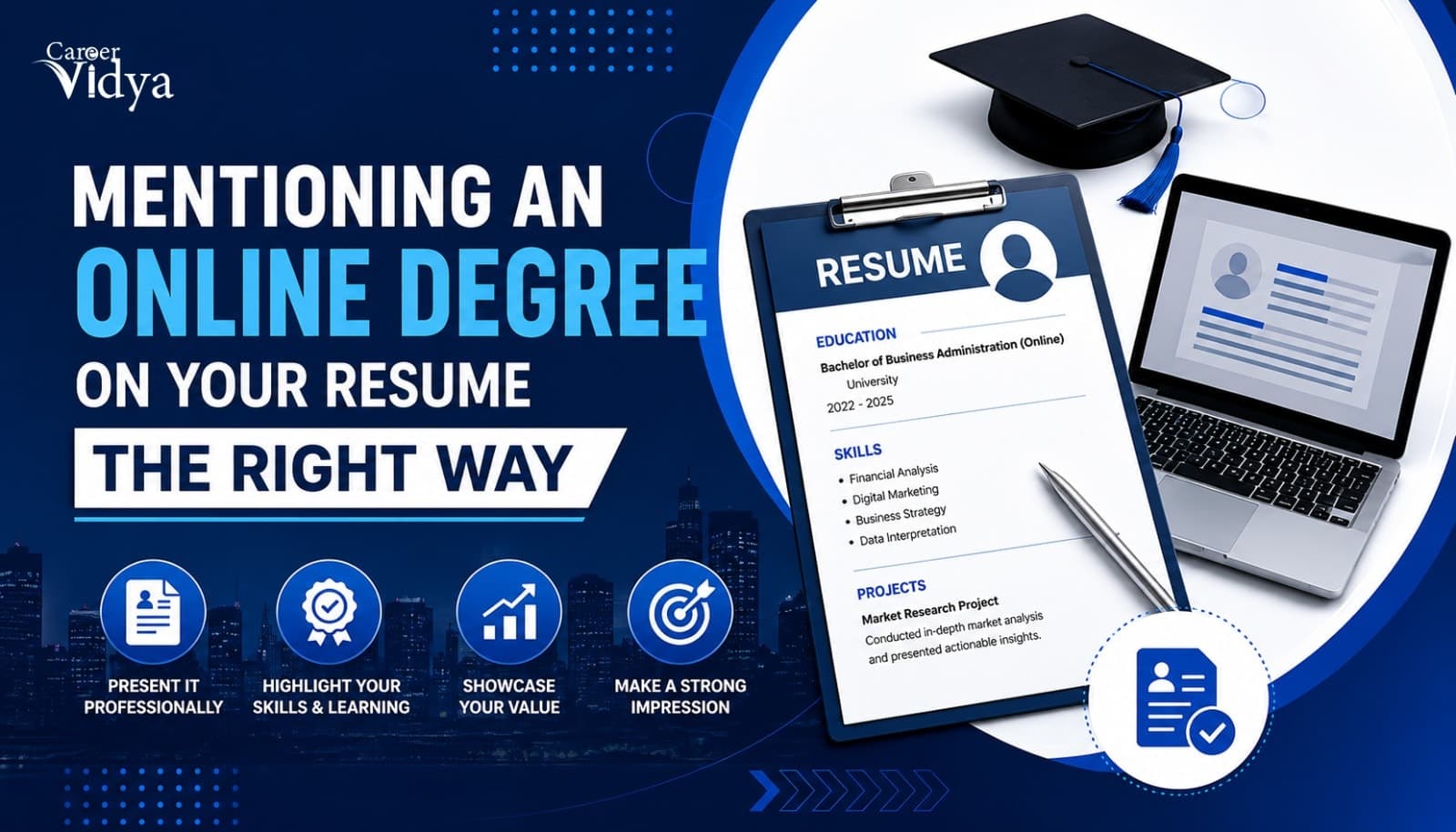
Completing an online degree is a big step—especially if you have managed it along with your work, family responsibilities, or a career transformation . But once the degree is done, many learners face a practical question:
How should you mention an online degree on your resume?
The answer is not as complex as most people think. The goal is not to “hide” that the degree was completed online. It is to present it clearly, professionally, and in a way that helps recruiters understand your qualification without being confused.
#Why It Matters?
Before reviewing your experience or skills, many recruiters quickly scan your education section to verify your academic background. A clearly presented online degree can help you create a positive first impression and allows recruiters to understand your qualifications within seconds.
- Creates instant credibility
- Confirms your qualification
- Highlights your academic growth
- Makes ATS parsing easier
- Builds recruiter confidence
A. START WITH THE DEGREE, NOT THE MODE OF LEARNING:
Your resume should focus on the qualification you earned, not just the format in which you studied. If your degree is from a well recognised university, it should usually be listed just like any other academic degree. As online education becomes more conventional , more students and working professionals are using online degrees to strengthen their academic profile without compromising in their personal and professional responsibilities.
For example, instead of writing:
Online MBA
or
Distance Learning BBA
it is better to write:
Master of Business Administration
XYZ University
Graduated: 2024
This keeps the key priority on the degree itself, which is what recruiters are primarily looking at. A well-written resume helps your qualification stand out for the right reasons, especially when your education is part of a larger career growth or career transition story.
B. MENTION YOUR UNIVERSITY CLEARLY:
The most important detail in your education section is the name of the awarding university. If the institution is well known and the programme is valid, that should be visible on your resume in a straightforward format.
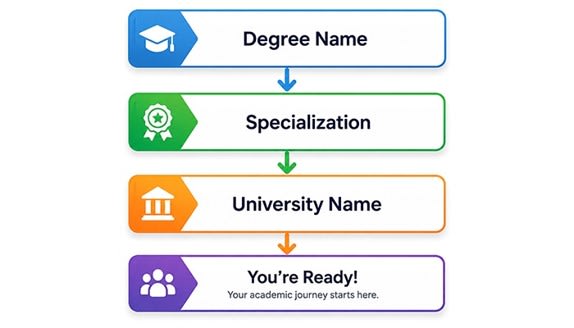
A simple structure works best:
- Degree name
- Specialisation (if any)
- University name
- Year of graduation
Example:
MBA in Marketing
ABC University
Graduated: 2025
If your online degree has helped you build a stronger academic foundation while continuing your job, the resume should reflect that confidently. A common concern among learners is whether the word “online” should be highlighted separately on the resume or not. In most cases, the answer is no.
If the degree has been awarded by a recognised university ,the focus should be on the qualification rather than how it is delivered. The recruiter’s attention should go first to the degree name, the institution, and the year of completion. This creates a cleaner impression and helps your resume look more polished and academically structured.

The university name plays an important role in building trust on a resume. A recognised institution adds reliability to your academic background and helps the recruiter understand the value of the degree at a glance. That is why the education section should always mention the university clearly instead of focusing too much on terms like “online mode,” “virtual learning,” or “distance classes.” The degree should look like a formal academic achievement, not like an informal short-term course entry.
C. KEEP THE FORMAT CLEAN AND PROFESSIONAL
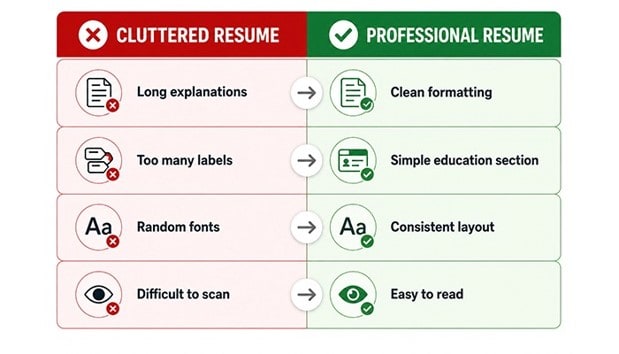
Many learners make unnecessary complications over the education section because they worry that “online” might be judged differently. In reality, the bigger issue is often unstructured formatting, not the degree itself.
A clean resume entry makes your profile easier to read and understand. Avoid writing long explanations in the degree title itself. If you want to mention that you completed the programme while working full-time, that can be highlighted in your summary or during the interview—not necessarily in the degree line.
The way your education is presented can influence how confidently your profile is read. A cluttered entry with too many labels, explanations, or unnecessary words can make even a strong qualification feel less impactful. On the other hand, a simple and well-structured format makes it easier for recruiters to focus on what matters most—your degree, your institution, and the effort you have put into upskilling yourself. In many cases, simplicity creates a stronger professional impression than over-explaining the learning format.
D. SEPARATE DEGREES FOR CERTIFICATION
This is one of the most common mistakes on resumes. A full online degree should be listed under Education, while short-term online certifications should go under a separate Certifications section.
This variation becomes even more important for professionals who have completed both a degree and multiple online certifications. While certifications can add value by showing specialisation and initiative, they should not outshine the degree itself. A full academic qualification should remain a separate and prominent part of the education section, while certifications should support the profile as additional learning achievements. Organising them correctly makes your resume easier to read and gives each qualification the right level of importance.
# WHAT TO AVOID WHILE MENTIONING AN ONLINE DEGREE?
One of the most common mistakes learners make is trying too hard to “justify” their online degree on the resume. This often leads to wording that sounds defensive or overly descriptive. For example, adding long phrases about remote learning, virtual classes, or flexible study mode can make the entry look less professional than it actually is. The better approach is to treat the degree with the same clarity and confidence as any other recognised academic qualification. Your resume should communicate the value of your education, not create unnecessary doubts around it.
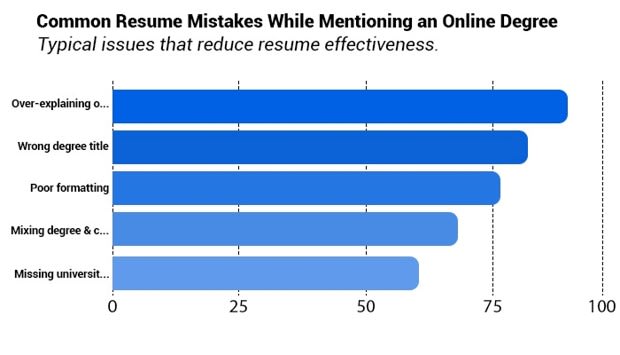
# COMMON RESUME MISTAKES :
Avoid these mistakes:
- writing only "online MBA"
- Hiding your university name
- Mixing certifications with your degree
- Using inconsistent formatting
- Mentioning every online course in the education section
- Forgetting graduation year
- Adding unnecessary explanations
E. YOUR ONLINE DEGREE DESERVES TO BE PRESENTED WITH CONFIDENCE
- An online degree is often a sign of discipline, consistency, and career intent. It shows that you invested in your education while managing real-life responsibilities. That should not be treated as a weakness on your resume.
- What matters most is that your degree is from a recognised institution and is presented in a clear, professional way. Use the official degree name, mention the university properly, and keep the format simple.
- For many students, it reflects the ability to continue growing while managing work, family, financial responsibilities, or even a career gap. That effort deserves to be represented with confidence. When listed properly, an online degree can strengthen your resume by showing that you made a deliberate investment in your future.
- At Career Vidya, we believe earning the right degree is only one part of the journey. The next step is knowing how to present it in a way that supports your career growth—and your resume is one of the first places where that story begins.

CONCLUSION
Mentioning an online degree on your resume is not just about listing qualifications—it is about thoughtfully presenting your learning journey in a way that reflects clarity, purpose, and confidence. A recognised online degree demonstrates your commitment to continuous learning, adaptability, and professional growth in an evolving job market. When presented effectively, it can add strong value to your profile by highlighting both your academic achievements and the practical skills you have developed along the way.
It is important to focus on how you position your degree—clearly stating the programme, university, and relevance to your career goals, along with key skills or specialisations gained during the course. This helps employers better understand the value of your education and its alignment with industry requirements.
At Career Vidya, we believe that meaningful career advancement begins with well-informed academic choices and the right guidance at every step. From helping you choose the most suitable online programme to guiding you in building a professional profile that reflects your strengths, we ensure that your education translates into real career opportunities. With the right approach, an online degree can become a powerful asset in shaping a successful and future-ready career path.
Common Questions
Q.1. Should I mention that my degree was completed online on my resume?
If your degree is from a recognised university, you can simply mention the official degree name, university, and graduation year. The learning mode usually does not need to be highlighted.
Q.2. Is an online degree considered valid by employers?
Yes, online degrees from recognised universities are widely accepted by many employers, provided they meet the required academic standards for the role.
Q.3. Where should I list my online degree on my resume?
Your online degree should be listed under the Education section, just like any other academic qualification.
Q.4. Should online certifications and online degrees be mentioned together?
No. A full degree belongs in the Education section, while short-term certifications should be listed separately under a Certifications section.
Q.5. How can I make my education section more professional?
Use the official degree title, mention the university name, include your specialisation (if applicable), and add your graduation year in a clean, consistent format.
Q.6. Will mentioning an online degree affect my chances of getting shortlisted?
A recognised online degree, presented professionally on a well-structured resume, should not negatively affect your chances. Recruiters focus more on your qualifications, skills, and experience.
Q.7. Can I include an online degree that I am still pursuing?
Yes. Mention the degree along with the university name and your expected graduation date to inform employers about your ongoing education.
Q.8. What are the most common mistakes people make when listing an online degree?
Common mistakes include using unofficial degree titles, omitting the university name, mixing certifications with degrees, and adding unnecessary explanations about the learning mode.
Q.9. Does the university name matter more than the mode of learning?
Yes. Recruiters generally pay more attention to the awarding university and the qualification earned than to whether the programme was completed online.
Q.10. Why is proper resume formatting important for online degree holders?
A clean and organised resume helps recruiters quickly understand your qualifications and creates a more professional first impression.

Written By
Career Vidya Team
Management Trainee • Content Writing